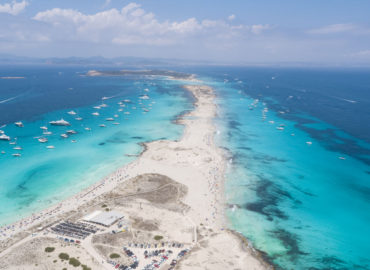
Ibiza planning happens in a pleasant order. Flights, then the villa, then a table at the beach club and the boat over to Formentera. Anything medical sits at the bottom of that list, somewhere below the airport transfer, and it stays there until the week of departure.
A few of those items can’t be fixed once you land. A pharmacy in Ibiza Town will sell sunscreen and painkillers within a minute of asking, and it won’t hand over a prescription medicine just because you show it a British label, which is why a pre-travel consultation through Anytime Doctor’s travel clinic belongs in the same week as the flight booking. The rest of the packing can wait until the night before.
Your UK prescription stops at the airport
A prescription written by a British GP is a British document. Spanish pharmacies dispense against Spanish prescriptions, so the repeat collected every month at home has no standing at a counter in Santa Eulalia. The practical version of that is dull and easy to plan for: travel with the full course in its original packaging, keep the dispensing label on the box, and carry a few days of margin in case the flight home moves.
The second half of the problem points the other way. The UK government’s health advice for Spain warns that the legal status and regulation of some medicines prescribed or bought in the UK can be different in other countries, and that applies to things sitting quietly in a wash bag, including items a British household keeps without ever thinking about them.
Reading the guidance is a kitchen table job on a Sunday. Sorting it out at the airport costs the first day of the trip.
Running out mid trip is the awkward case. A week in San Antonio with three days of tablets left isn’t a pharmacy problem, it’s a prescriber problem, and it is solved at home.
What a GHIC covers once you are on the island
The card does real work, and it has limits. Applying for a free GHIC through the NHS gets a British visitor state healthcare in Spain on the same basis as a resident, which may be free or may cost what a local would pay. Treatment in a private clinic sits outside it, and so does a flight home with medical support. The card and a travel insurance policy therefore do different jobs, and holidaymakers who pack only the first tend to find out which is which in a private waiting room. For an ambulance anywhere in Spain, the number is 112.
The short list worth sorting before the flight
Most of it is unglamorous. Something for an upset stomach, on a trip where the food is unfamiliar and the days are long. Something for motion sickness, because the crossing to Formentera can be choppy and an hour of that takes the shine off the whole day. Sun protection strong enough for an August afternoon on a boat, bought at home rather than at resort prices by the port.
A smaller group of requests is prescription only, and those are the ones people leave late: moving a period so it misses the holiday, or cover for travellers’ diarrhoea on a longer trip. They go through a written consultation rather than a conversation. A UK-registered doctor reads the form, decides whether treatment is appropriate, and the pharmacy sends it out, which is why the form wants filling in while there is still post between you and the airport.
Then there is the thing that has been going on for a while, the ache or the cough that has outlasted a month, the mole somebody mentioned in June. None of that belongs on a packing list. It belongs in front of a clinician before the suitcase comes out, because a clinic on the island, starting from nothing, is the expensive way to find out. Leaving it means meeting a doctor who has never seen your notes, on the third night, in a language you don’t speak.