You’ve done the beach clubs, sunset bars, and big DJ nights. You know there’s another side to Ibiza. The island has a small population of just over 160,000, but that number can more than double in the summer. Most visitors stick to popular spots like Ibiza Town, San Antonio, or Playa d’en Bossa. For your return trip, it’s time to head inland and explore the north.
This guide is for those who want a deeper experience. You’ll find villages where lunch is a slow, relaxed affair and hiking trails on ancient stone paths. You’ll also discover local markets that show you how the residents truly live.
How to Explore Like a Local
Going back to Ibiza changes the way you explore the island. Instead of rushing to the trendiest spots, you start paying attention to timing, distance, and getting around. A good day or a stressful one often depends on how well you plan for the way Ibiza really works.
Getting Around Without Losing Time
If you want to explore inland villages and smaller beaches, renting a compact car is your best option. The roads in the north and west are narrow, with sharp turns and little room on the sides. A smaller car makes parking in places like Santa Gertrudis or Sant Carles much easier, especially during the busy summer months.
Peak season, which runs from June to September, sees a big rise in rental demand. To avoid paying high last-minute prices, try to book your car at least two to three weeks in advance. If you plan to visit multiple villages in one day, group your stops by area to save time. Driving from Es Cubells to Portinatx at sunset can be tricky since traffic is usually heaviest between 5 p.m. and 8 p.m.
Public transport is available along main routes, such as from Ibiza Town to San Antonio, but it doesn’t serve rural areas well and is even less frequent outside of summer.
Timing Your Days Strategically
Ibiza’s population nearly doubles in the summer, which means more traffic, busier restaurants, and fewer parking spots.
To make your trip less stressful:
- Visit popular markets like Las Dalias before 11 a.m.
- Go for coastal drives in the early or late morning instead of the afternoon.
- Book popular countryside restaurants at least two days ahead in July and August.
For a more relaxed trip, consider visiting during the shoulder season in April, May, or October. The sea is still warm enough for swimming in early October, and you won’t have to compete with big crowds for restaurant reservations. Plus, many rural hotels have shorter minimum stay requirements during these months, offering more travel flexibility.
Eating and Living on Local Rhythm
Adjusting your meal times can change the way you experience the villages in Ibiza. Lunch usually starts around 1:30 p.m. and can go on until 4 p.m. Many restaurants offer a “menú del día,” which includes three courses and a drink at a set price. It’s an affordable and easy way to try traditional Ibizan dishes without paying high beach-club prices.
Dinner typically begins after 8:30 p.m. If you arrive earlier, you might find that the menu options are limited. For those staying longer, visiting local produce markets in Santa Eulalia or Sant Josep is a great way to explore seasonal ingredients. Ibiza is known for its almonds, figs, citrus, and small-batch olive oil, which are often only available locally and rarely exported.
Walking Historical Paths
You don’t need to drive everywhere on the island. For a unique experience, take a walk on the Camí de sa Pujada near Es Cubells. This is a very old stone path that farmers used for centuries to travel from their inland farms to the sea. Walking this path helps you imagine how separate parts of Ibiza were from each other before modern roads were built.
If you decide to go, make sure to wear good walking shoes and bring plenty of water. Many of these country trails do not have any shade, and in the summer, it can get hotter than 86°F during the middle of the day.
Thinking Beyond the Vacation Mindset
If you start spending more time on the island, your priorities may change. You might begin looking into long-term rentals, private health insurance, or the rules for residency under Spain’s immigration system.
Keep in mind that buying property in Spain doesn’t automatically lead to citizenship. Because of this, some frequent travelers consider other options, like Caribbean citizenship by investment programs, which offer broader visa-free travel. This kind of thinking often comes into play once Ibiza becomes a regular part of your life, rather than just a once-a-year getaway.
To truly explore like a local, it’s important to understand the island’s scale, timing, and systems. Once you get into the rhythm of life here, Ibiza stops feeling like just a destination and starts to feel like a place you truly know.
Copyright: Unsplash | License: CC0 Domain
Four Places That Show You the Ibiza Most Visitors Miss
Step away from the main resorts, and you’ll quickly realize how small Ibiza is. You can drive across the entire island in about 45 minutes, but its culture feels rich and diverse. For those who visit often and want a more authentic experience, the following spots are especially rewarding.
Santa Gertrudis de Fruitera: The Island’s Social Crossroads
Santa Gertrudis, located near the center of Ibiza, has quietly become a year-round spot for artists, remote workers, and families. The village square is surrounded by charming whitewashed buildings and the historic 18th-century Sant Gertrudis church.
Life here moves at a different pace. Cafés open early for coffee and stay lively well into the evening. For a true local experience, stop by Bar Costa and order a bocadillo with jamón serrano. This spot has been a favorite since the 1980s, and its walls are filled with contemporary art that reflects the creative spirit of the village.
If you’re thinking about a longer stay, Santa Gertrudis is one of the most convenient areas for rentals. It’s about 15 to 20 minutes from both Ibiza Town and the airport, but far enough away to avoid the busy coastal crowds.
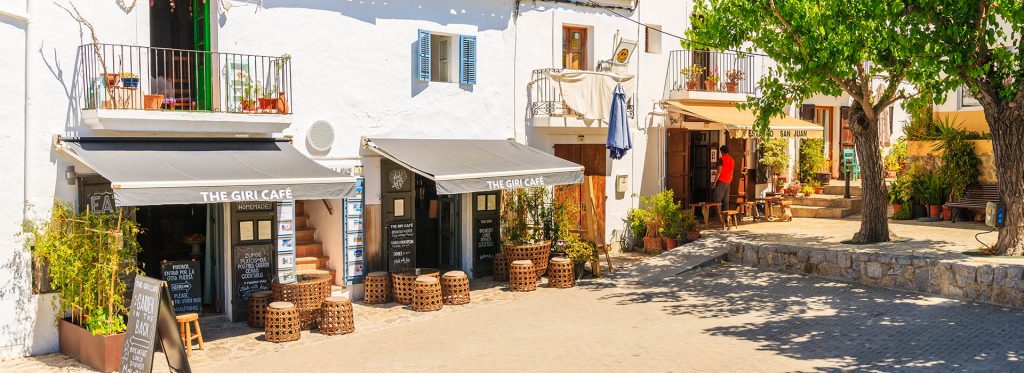
Sant Joan de Labritja: Northern Ibiza at Its Most Traditional
Head north to reach Sant Joan, one of the least developed municipalities on the island. The town hosts a weekly Sunday market that focuses on handmade crafts, local honey, and small-batch olive oil.
This part of Ibiza has stricter planning regulations, which have limited large-scale construction. As a result, you will see more fincas and agricultural land. If you enjoy hiking, the trail from Cala Xarraca toward Portinatx passes through pine forests and offers wide views over the Mediterranean.
If you drive, try to arrive before 11 a.m. because parking is limited and the narrow roads require patience. You will quickly see why many long-term residents choose this area for its privacy and space.
Es Cubells: Dramatic Views Without the Scene
Es Cubells sits on cliffs along the southwest coast, offering some of the most breathtaking views on the island. Its white church, built in the 19th century, looks out over the sea toward Formentera.
Unlike busier coastal areas, Es Cubells doesn’t have a crowded commercial strip. Instead, it’s a place to enjoy the stunning scenery and relax over a long lunch at one of the cliffside restaurants. If you’re looking for a nearby beach, take a short drive to Cala d’Hort. From there, you can admire Es Vedrà, the famous limestone islet surrounded by myths and legends.
To avoid heavy traffic, try not to visit during late afternoons in July and August. If you can, plan your trip for May or September when the roads are quieter and the conditions are more pleasant.
Sant Carles de Peralta: Markets and Music History
Sant Carles is located in the northeast of Ibiza and has deep ties to the island’s 1960s counterculture. One of its highlights is the Las Dalias market, which started in 1954 and now attracts thousands of visitors each week during the summer. By 2024, it had become one of Ibiza’s most famous artisan markets, offering daytime stalls and evening events.
If you visit, take your time to explore. Walk through the entire market, chat with the vendors about their products, and stick around for some live music. You’ll find a wide range of prices, especially for handmade items like leather goods and silver jewelry, which showcase real craftsmanship.
Outside the market, the village of Sant Carles has a charming, lived-in atmosphere. Bar Anita, a beloved local spot, still serves as a postal pickup point for some residents, keeping its traditional role alive.
Returning to Ibiza Changes Your Experience
When you return to Ibiza, the island feels different. You might recognize the baker in Santa Gertrudis or know which road to take to avoid traffic near Sant Josep. You learn that a beautiful sunset can be watched from a quiet hillside, not just a crowded venue.
Ibiza is a small island, just over 220 square miles, but its character changes from one village to the next. This small size makes it easy to explore. You can stay in one spot and still drive to see many different landscapes.
Visiting again gives you a perspective that new travelers often miss. It is not about exclusive access, but about feeling at home. The island becomes more than just a destination; it becomes a living place with its own unique rhythm.
So, the next time you arrive at Ibiza Airport, think about trying something new. Drive inland and take the smaller roads. Order your lunch in Spanish. Let the island reveal a side of itself that rewards those who take their time.