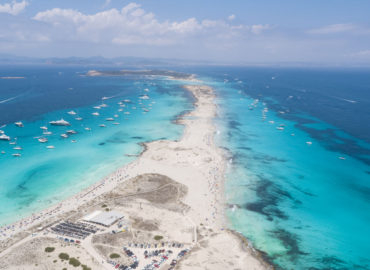
Ibiza is celebrated for its golden beaches, hidden coves and unforgettable sunsets, but beneath its crystal-clear waters lies another world waiting to be explored. While many visitors head out on boat trips or spend their days relaxing by the sea, scuba divers and snorkellers have the opportunity to discover an impressive variety of Mediterranean marine life just below the surface.
The island’s warm waters, extensive Posidonia oceanica seagrass meadows and protected marine reserves create the perfect environment for a thriving underwater ecosystem. Whether you’re taking your first dive or you’re an experienced diver exploring Ibiza’s famous reefs and caves, every descent offers the chance to encounter fascinating sea creatures in their natural habitat.
Here’s a closer look at some of the marine life you might spot while diving around Ibiza.
Why Ibiza offers excellent marine life encounters
Ibiza’s underwater landscape is shaped by rocky reefs, underwater cliffs, caves and vast meadows of Posidonia oceanica. Often mistaken for seaweed, Posidonia is actually a flowering seagrass that plays a vital role in maintaining the island’s exceptionally clear waters. It produces oxygen, stabilises the seabed and provides shelter for countless marine species throughout their life cycles.
Large areas around Ibiza and neighbouring Formentera are protected as part of the Ses Salines Natural Park, helping preserve habitats where marine life can flourish. Combined with excellent visibility that often exceeds 25 metres during summer, these conditions make Ibiza one of the Mediterranean’s most rewarding diving destinations.
Colourful reef fish around Ibiza
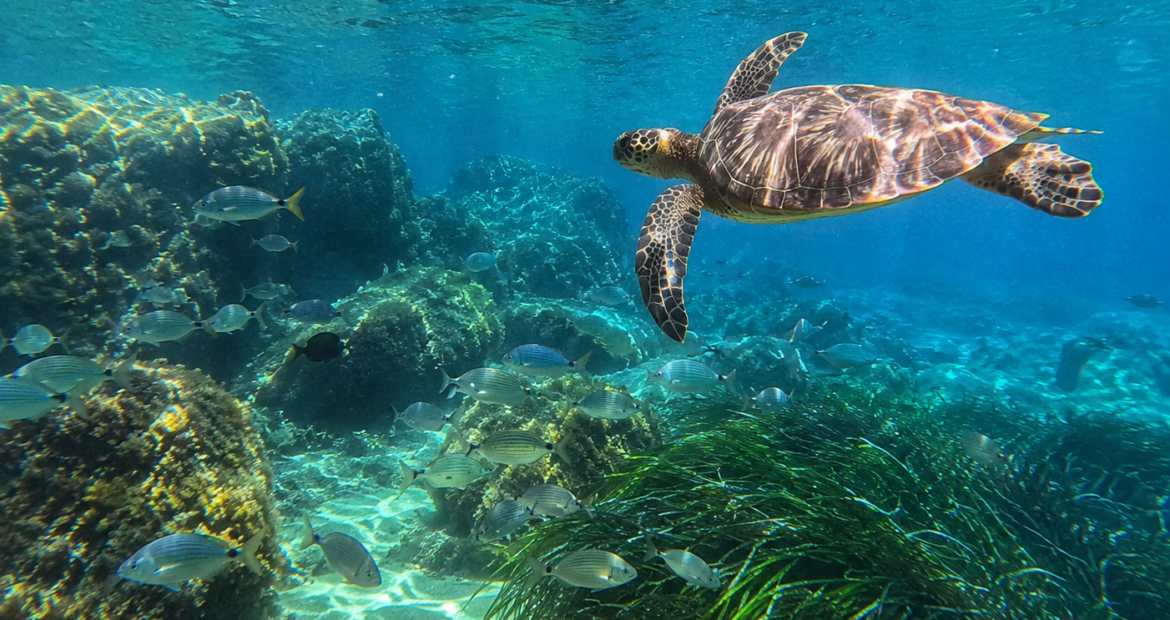
Even on a short dive, you’ll quickly notice the abundance of fish moving through the rocky reefs and seagrass beds. Schools of shimmering damselfish are among the first species many divers encounter, while colourful wrasse weave effortlessly between rocks searching for small crustaceans.
You may also spot:
- Saddled seabream
- Two-banded seabream
- Salema porgy
- Mediterranean rainbow wrasse
- Cardinalfish hiding beneath rocky ledges
These species are active throughout much of the year, making every dive feel full of movement and colour. Larger schools often gather around reefs where currents bring a steady supply of food.
Photographers particularly enjoy these fish because their behaviour is predictable, allowing plenty of opportunities to capture vibrant underwater images.
Octopus and other masters of camouflage
Among Ibiza’s most fascinating residents is the common octopus. Intelligent, curious and remarkably adaptable, octopuses are experts at blending into their surroundings. One moment they appear invisible against the rocks, and the next they reveal themselves by changing colour or texture in an instant.
Divers who carefully examine crevices and rocky overhangs may also discover Mediterranean moray eels. Although their appearance can seem intimidating, morays are generally shy and spend much of the day tucked safely inside their rocky homes with only their heads visible.
Other intriguing creatures include:
- Cuttlefish
- European squid
- Spider crabs
- Mediterranean slipper lobsters
Early morning and late afternoon dives often provide the best opportunities to observe these animals becoming more active.
Tiny creatures with remarkable beauty
While larger marine animals often attract the most attention, experienced divers know that some of Ibiza’s greatest underwater treasures are much smaller. The island’s rocky reefs are home to numerous tiny invertebrates that reward those who slow down and look carefully.
Sea slugs, shrimps, gobies and blennies can all be found living among algae-covered rocks and coral-like organisms. Among the most fascinating are colourful nudibranchs, whose intricate patterns and striking colours make them favourites among underwater photographers. Divers interested in learning more about colourful nudibranchs often discover just how diverse these remarkable sea slugs are in marine habitats around the world.
Macro photography has become increasingly popular in Ibiza because these tiny creatures reveal an extraordinary level of detail that is often overlooked during faster dives.
Rays and larger pelagic visitors
Although reef life dominates most dives, larger marine species occasionally make exciting appearances.
Depending on the season and dive location, lucky divers may encounter:
- Eagle rays gliding gracefully above sandy seabeds
- Stingrays resting partially buried beneath the sand
- Schools of barracuda cruising through open water
- Amberjack hunting smaller fish
- Occasional Mediterranean sunfish, also known as mola mola
These encounters are never guaranteed, making them all the more memorable when they happen. Dive guides often keep an eye on changing currents and seasonal conditions that increase the likelihood of spotting larger visitors.
Sea turtles and other protected wildlife
Loggerhead sea turtles are not permanent residents around Ibiza, but they do occasionally pass through the surrounding waters. Seeing one is considered a special privilege, and divers should always maintain a respectful distance without attempting to follow or touch the animal.
Dolphins can also sometimes be spotted from dive boats travelling between sites, particularly in quieter offshore areas. While underwater encounters are relatively uncommon, their presence highlights the healthy marine environment surrounding the island.
Many species found around Ibiza benefit from conservation measures designed to protect fragile habitats from overfishing and environmental damage. Responsible tourism plays an important role in ensuring these ecosystems remain healthy for future generations.
Protecting Ibiza’s underwater world
The marine life that makes diving around Ibiza so rewarding depends on careful conservation and responsible diving practices.
Every diver can help by following a few simple principles:
- Maintain good buoyancy to avoid damaging the seabed.
- Never touch or chase marine animals.
- Avoid collecting shells or other natural souvenirs.
- Keep a respectful distance when photographing wildlife.
- Never leave litter behind, either underwater or on the shoreline.
These small actions help preserve the island’s rich biodiversity while allowing marine life to behave naturally.
A different side of Ibiza
Ibiza’s reputation may be built on beautiful beaches, vibrant nightlife and spectacular sunsets, but its underwater world deserves equal recognition. From colourful reef fish and intelligent octopuses to graceful rays and tiny sea slugs hidden among the rocks, every dive reveals another layer of the island’s remarkable natural beauty.
Whether you’re earning your first diving certification or returning to explore new sites, the waters surrounding Ibiza offer unforgettable encounters with Mediterranean marine life. Slow down, look closely and you’ll soon discover that some of the island’s most extraordinary experiences happen beneath the surface.