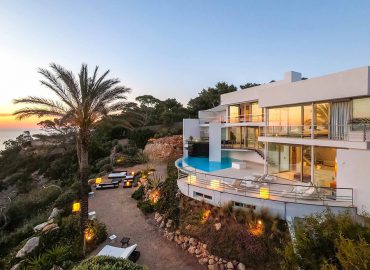
Ask anyone what they remember about a stay in an Ibiza villa and they rarely mention the interiors. They talk about the light. Mornings when the whole living space seems to open onto the terrace, the smell of pine coming through, the line between indoors and outdoors dissolved to almost nothing. That effect feels effortless, which is exactly why so much design effort goes into it.
The island’s best villas, whether traditional fincas restored over generations or the crisp white new builds above the bays, share a common architectural language, and it is worth understanding whether you are buying, renovating or simply choosing where to stay.
Built around the outside
Traditional Ibicenco architecture always treated outdoor space as part of the house. Thick whitewashed walls kept the heat out, small windows kept rooms cool, and life happened on the porxo, the covered terrace that served as summer living room, dining room and social heart of the home.
Modern villa design keeps that principle and reverses the means. Where the old finca used small openings to manage the climate, contemporary builds use enormous ones, with glazing engineered to open entire elevations to the view. The terrace is no longer a separate place you go out to. It is a continuation of the floor, the ceiling line and the sightline, interrupted as little as possible.
The details that make it work
That seamlessness lives or dies on a handful of practical choices.
Level thresholds matter more than almost anything. When the interior floor runs out to the terrace at the same height, with drainage hidden in a slim channel, bare feet and dinner trays move freely and the space genuinely doubles in summer. A step or a chunky frame at the junction quietly reinstates the boundary the design is trying to erase.
Glazing choice is the other big one. Full-height sliding and folding systems carry the panoramic work, but the humbler openings earn their keep daily: a well-placed balcony door from an upstairs bedroom turns a morning view over the bay into a morning routine, and on renovated fincas, where wall openings are smaller and structural change is limited, high-quality glazed doors are often the single most transformative upgrade available. The northern European manufacturers have become a quiet fixture on the island for exactly this reason: timber and aluminium-clad systems built for harsh Scandinavian weather cope admirably with the Mediterranean’s own extremes of salt air, driving winter rain and relentless summer sun.
Shade completes the set. The island’s light is glorious and merciless in equal measure, and the villas that work best in August are the ones designed with deep overhangs, pergolas and the old wisdom of the porxo, so that the open house is also a cool one.
Renovating with respect
For those restoring an older property, the temptation is to open everything up at once. The better approach, and the one the island’s planning authorities increasingly insist on, is to work with the building’s character: keep the thick walls and the shaded outdoor rooms that already manage the climate brilliantly, and introduce the larger openings where they count, on the elevations with the views and the evening light.
Done well, the result is the best of both traditions. The old house keeps its cool, quiet interior for the fierce hours of the day, and opens generously to the terrace for the hours that Ibiza does better than anywhere: the long golden evening, the table outside, the doors folded back, and no real answer to the question of whether you are indoors or out.
That, in the end, is the luxury the island sells. Not marble or square metres, but a way of living in the light. The villas that deliver it are the ones designed, down to the last threshold and door, to get out of its way.